SEM · spent-coffee hydrochar, 275 °C · ×300
Waste-to-Resource Lab · Technion

From treating waste to designing future resources.

“Waste is not a property of a material. It is a failure of the system to find a use for it.”

Resource scarcity, population growth, and climate change demand a paradigm shift: waste must be recognized as a renewable source of carbon, nutrients, energy, water, and functional materials. We develop integrated Waste-to-Resource platforms that turn complex waste streams into valuable products while minimizing environmental impacts.

2019-rate plastic waste clock
—
tonnes of unutilized plastic waste

Plastic waste the world would generate by now at the OECD’s 2019 rate of 353 Mt/year — about 11 tonnes every second. Illustrative, not a live measurement; resets 00:00 UTC.

Explore the Plastic Atlas
The shift

Can we stop managing waste as an endpoint — and start engineering it as a resource?

  1. Disposal

    Where do we put it?

  2. Treatment

    How do we treat it?

  3. Recovery

    What can be recycled?

  4. Resource Engineering

    What value can we design into it?

    Where we work

As the technology evolves, so does the question. Our lab works at the fourth stage — engineering waste streams, from their chemistry to their end use, as sources of value.

Our philosophy

Three principles guide everything we do

PRINCIPLE 01

Complexity is an opportunity

Real-world waste streams are chemically heterogeneous and constantly changing. Instead of treating that complexity as a limitation, we use it to uncover new pathways for recovering energy, nutrients, chemicals, clean water, and functional carbon.
PRINCIPLE 02

Integrate, don’t isolate

Rather than studying thermochemical, biological, and nature-based technologies separately, we explore how they can work together as circular systems that recover multiple resources from a single waste stream.

PRINCIPLE 03

Bridge the scales

From molecular and microbial mechanisms, through pilot-scale systems, to techno-economic and life-cycle assessment — so that new technologies are not only innovative, but scalable, economically viable, and environmentally beneficial.

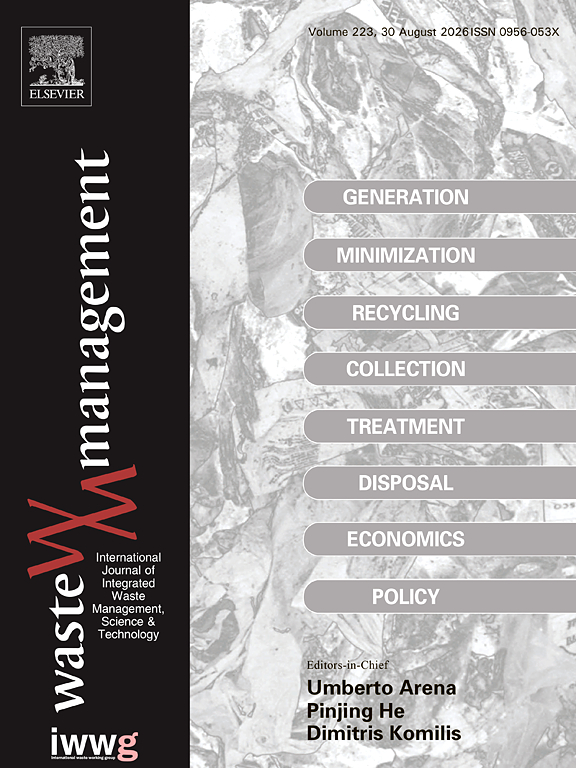
Waste Management journal cover
Just published

Decoupling salinity and carbon function during hydrothermal carbonization of anaerobic digestate

Kaffman I, Posmanik R · Waste Management, 223, 115714. (2026)

Read the paper
Work with us

Let’s design tomorrow’s resources together.

Interested in collaborating, visiting, or joining the lab as a student or postdoc? We’d love to hear from you.